
Teaching Design Through Speculation and Sensory Engagement
Over the past ten years of my pedagogical journey, I’ve consistently turned to Critical and Speculative Design as a method for engaging design students beyond function and form. It’s become a core tool—not just to teach them how to think critically and research with depth, but to introduce what I call a “manufacturing language”: a nuanced understanding of how material, process, and assembly communicate meaning. Now, as an Associate Professor at Pratt Institute, I’m proud to expand this approach further—using design not as an end, but as a medium. A way of thinking. A way of asking.
To me, design is a language. Like poetry, it can be composed—material becomes metaphor, joinery becomes syntax. In the classroom, I encourage students to use the language of industrial design—one often seen as technical or utilitarian—as a poetic form of communication. Through this lens, design becomes a way to articulate questions that don't always seek answers, but invite new kinds of awareness.
This semester, we explored this through a project rooted in flânerie—the act of wandering as a sensory and reflective experience. Drawing from the figure of the flâneur, and more specifically the flâneuse, we examined how design might emerge from embodied observation. The flâneuse, unlike her historically passive male counterpart, engages the city not with detachment, but with deep sensory presence. Inspired by Marie Bashkirtseff’s longing for freedom and creative exploration, we turned the everyday act of commuting into a design prompt.
Students were asked to map their journey from home to Pratt and identify a “third space”: a moment or place that stirred emotion, curiosity, or wonder—be it the smell of fresh bread from a corner bakery, the sharp wind between subway cars, or the rhythm of footsteps on a staircase. From this moment, they designed a portable object that enhances and shares that sensory experience with others.
This was not about solving a problem. It was about using design as a medium for inquiry, for speculation, for expression. The object had to function, had to be manufacturable and materially coherent. But its purpose could be poetic, even absurd—so long as it communicated a sensory point of view.
This way of teaching—and of thinking about design—invites students to reimagine what it means to make. We design not to fix, but to ask better, stranger, more unexpected questions. We design to see what’s been overlooked. We design to give form to the spaces in between.
José de la O, December 2025
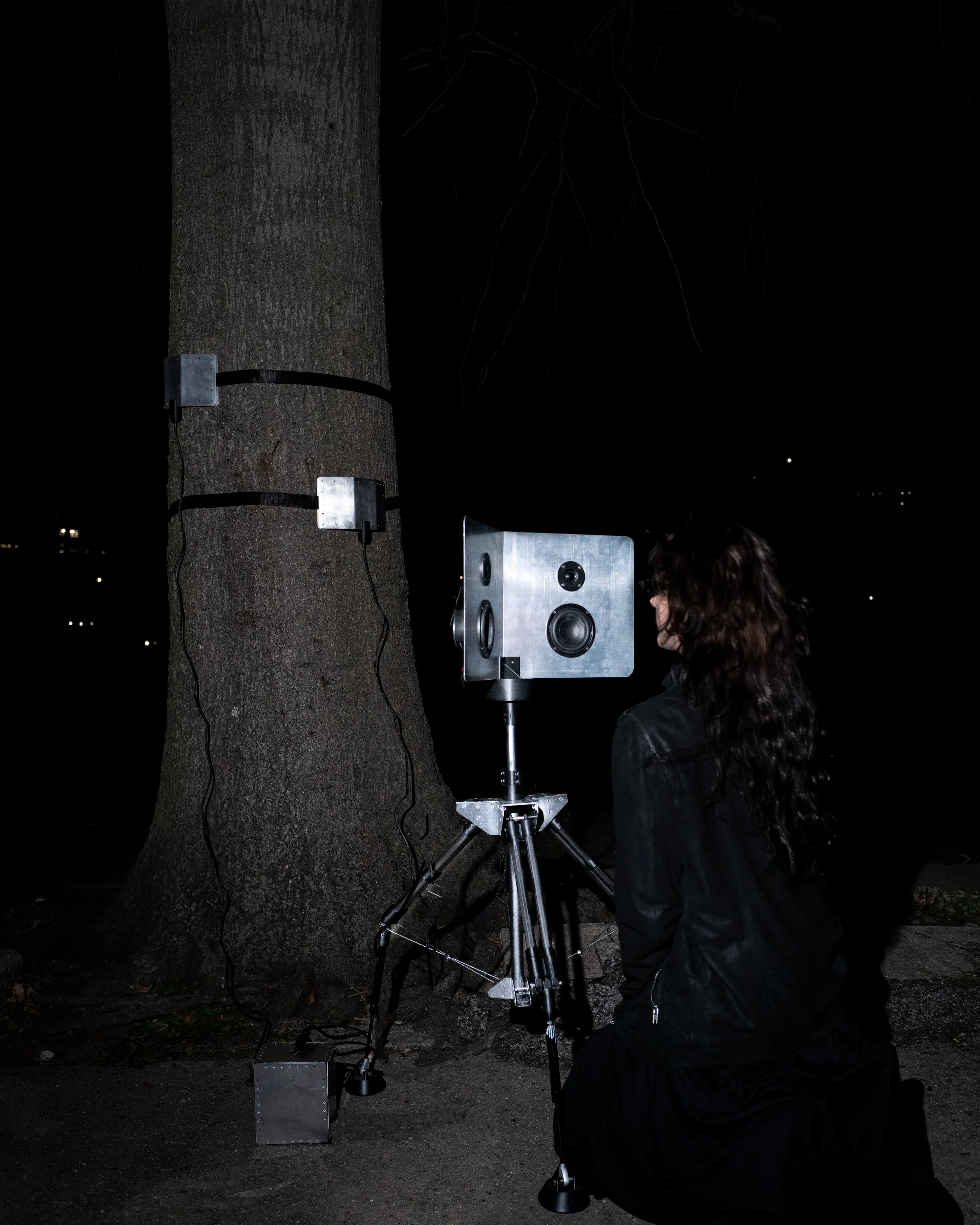
“Anticipation” by Joshua Cruz.
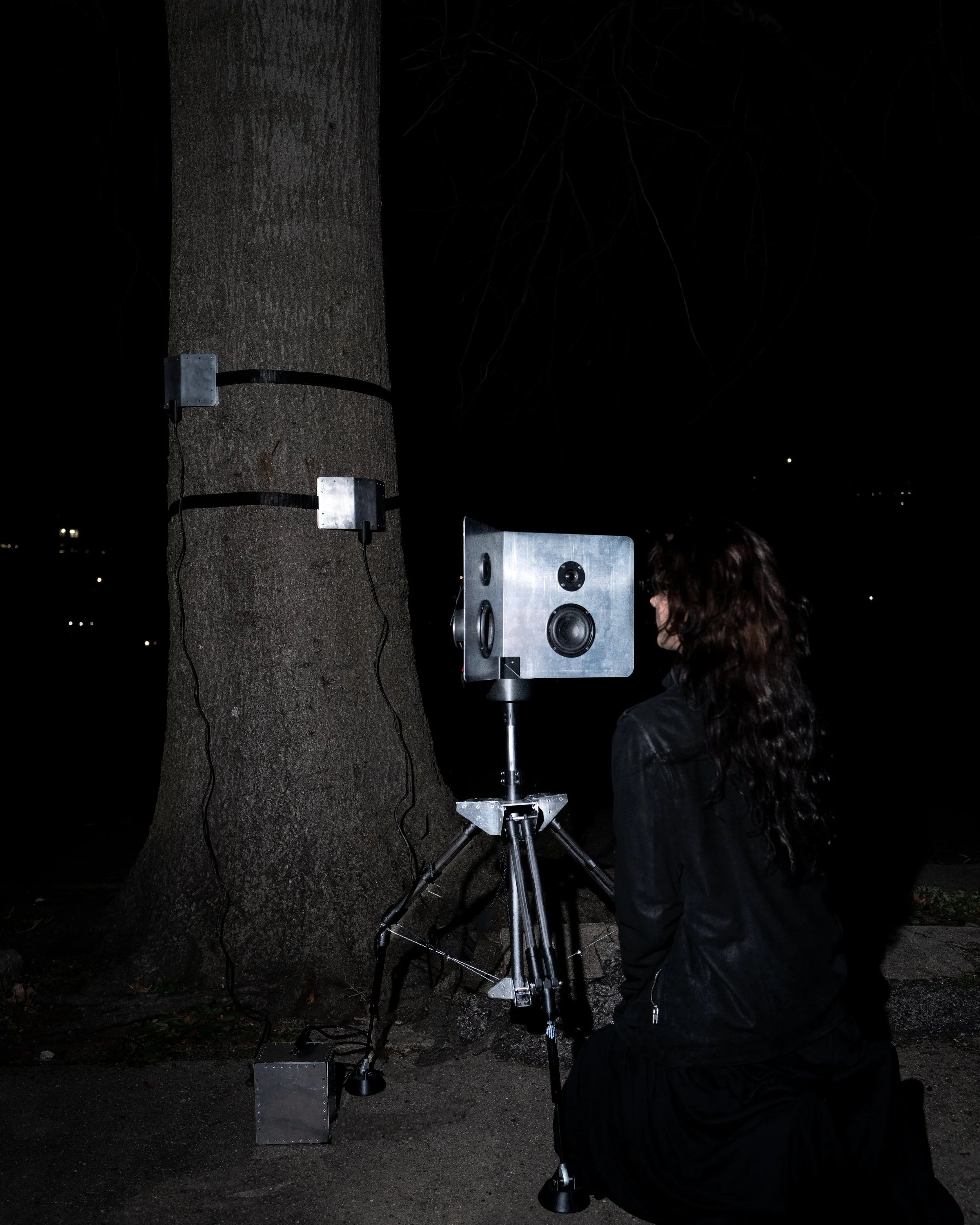
Our commutes are filled with sonic “omens”: the whir of a freewheel before a cyclist passes, the beat of footsteps on wet ground before a runner emerges, the distant roar of a plane moments before it appears overhead. These are fleeting sounds, subtle warnings or quiet invitations that signal what’s about to arrive.
What if an artifact could make these anticipatory signals more tangible? This project proposes a multidirectional sonic capturing device that allows the user to isolate and tune into these ephemeral cues, discerning the approach of a bike rider, the passing of a jogger along the edge of Prospect Park, or the overhead trajectory of an unseen aircraft.
By transforming ambient noise into a curated sensory experience, the artifact invites a slower, more attentive mode of being in the city. Not as a passive listener, but as a sonic flâneur—someone who wanders not just through space, but through sound. In doing so, it offers an alternative way to contemplate the phenomena of the park and the choreography of urban life through a heightened awareness of its acoustic ecology.
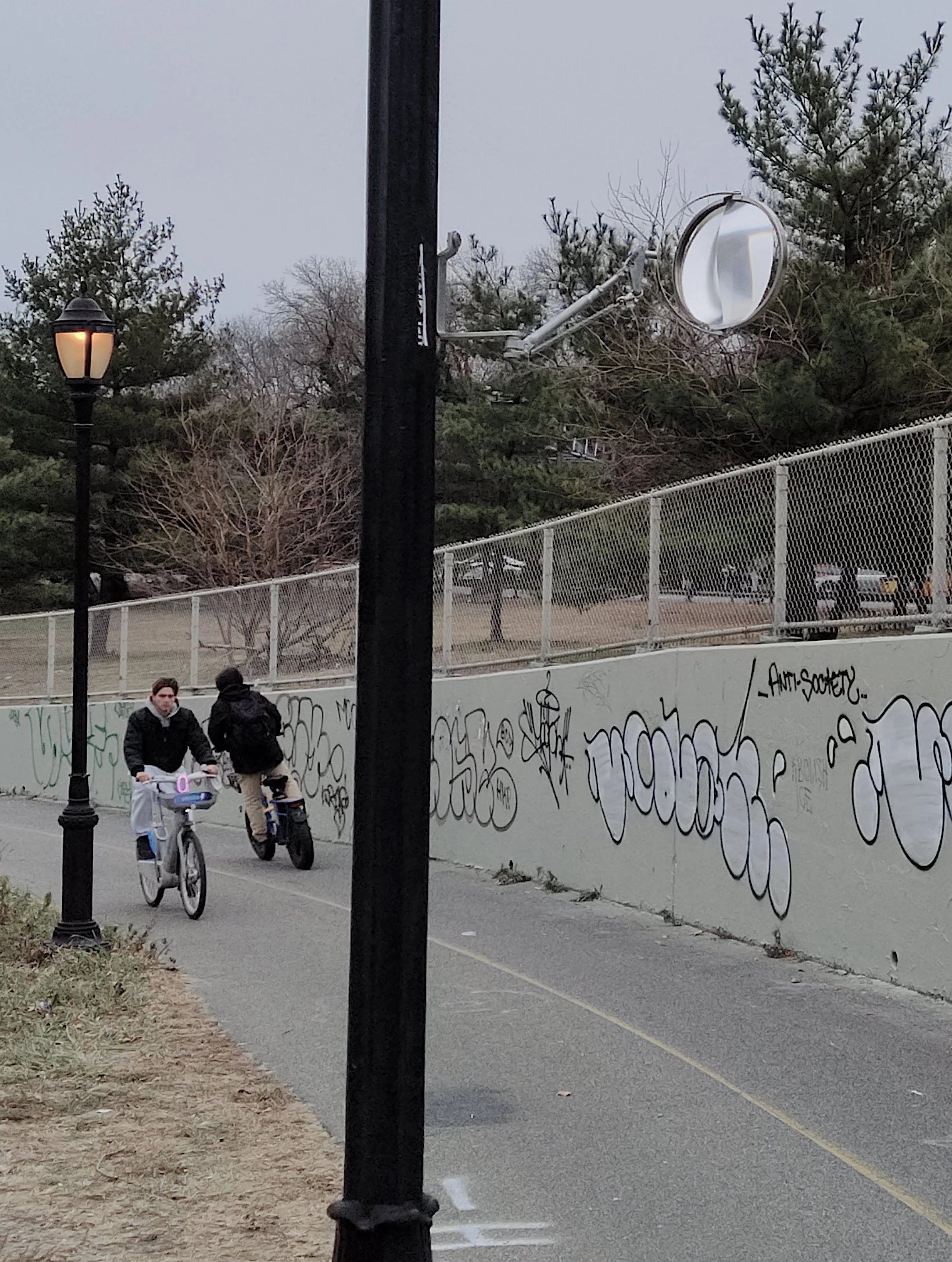
“VAWT Climate Beacon” by Andras Pokorny.
Installed at the base of the Manhattan Bridge Bike Path, this subtle intervention marks the presence of a recurring but often unnoticed microclimate—an ephemeral pocket of cool, sweet air that emerges most vividly in the summer months. Cyclists approaching the loop experience a sudden sensory shift: the air changes in temperature, texture, and scent, transitioning from the dense, dusty fabric of the city to something unexpectedly lush and refreshing.
Pokorny's intervention makes this fleeting phenomenon visible. A vertical axis wind turbine captures and reflects the movement of air and light. Constructed with shape-shifting Nitinol springs, the structure subtly deforms in response to temperature changes, offering a live reading of the atmospheric conditions it inhabits.
In a city where routines often dull perception, VAWT Climate Beacon acts as both marker and amplifier—drawing attention to the microclimates that shape urban life yet rarely register in our consciousness. By tuning into these overlooked shifts in air and energy, Pokorny invites viewers to reconsider their relationship with the environment, suggesting that even the smallest atmospheric details carry poetic and ecological significance.
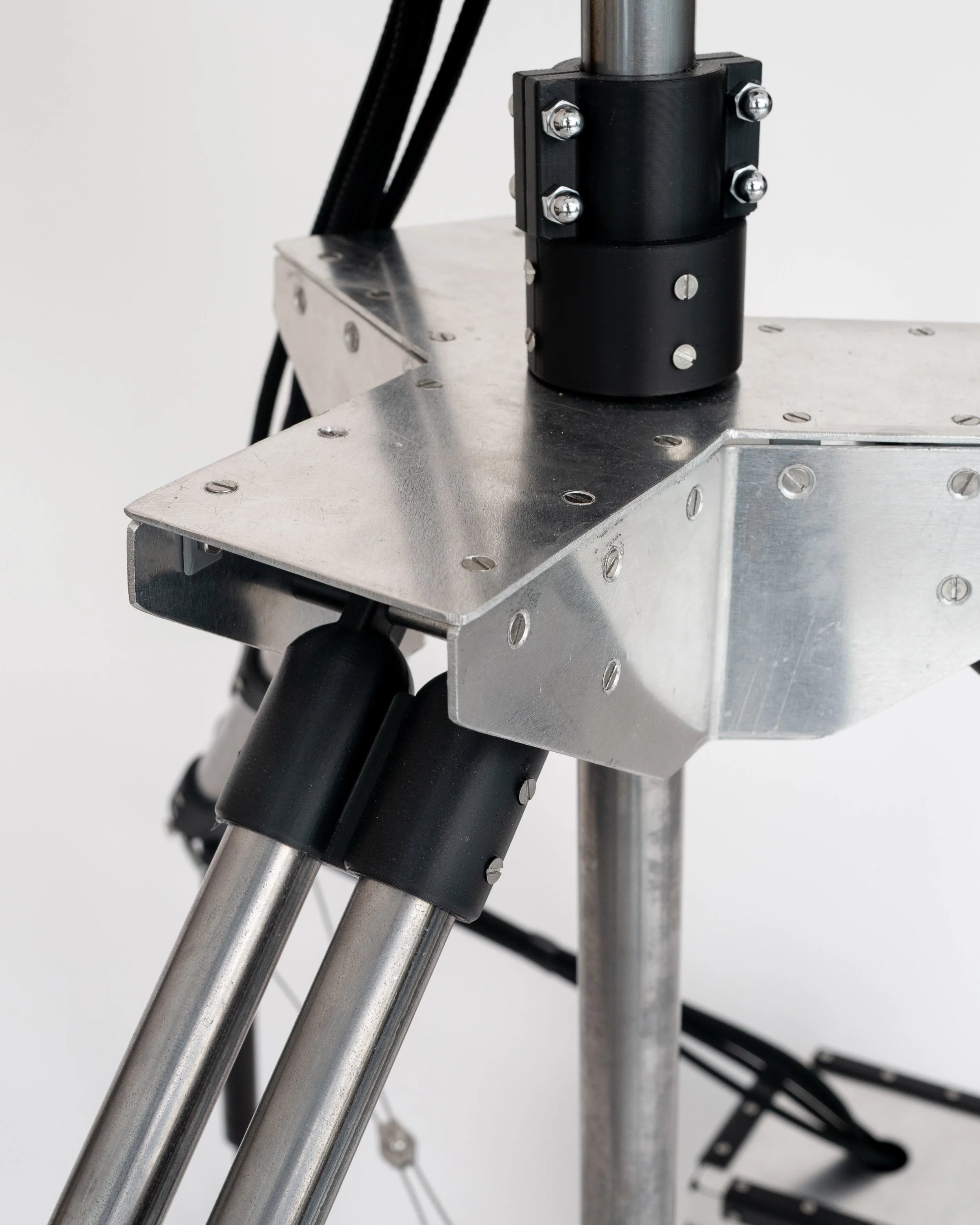
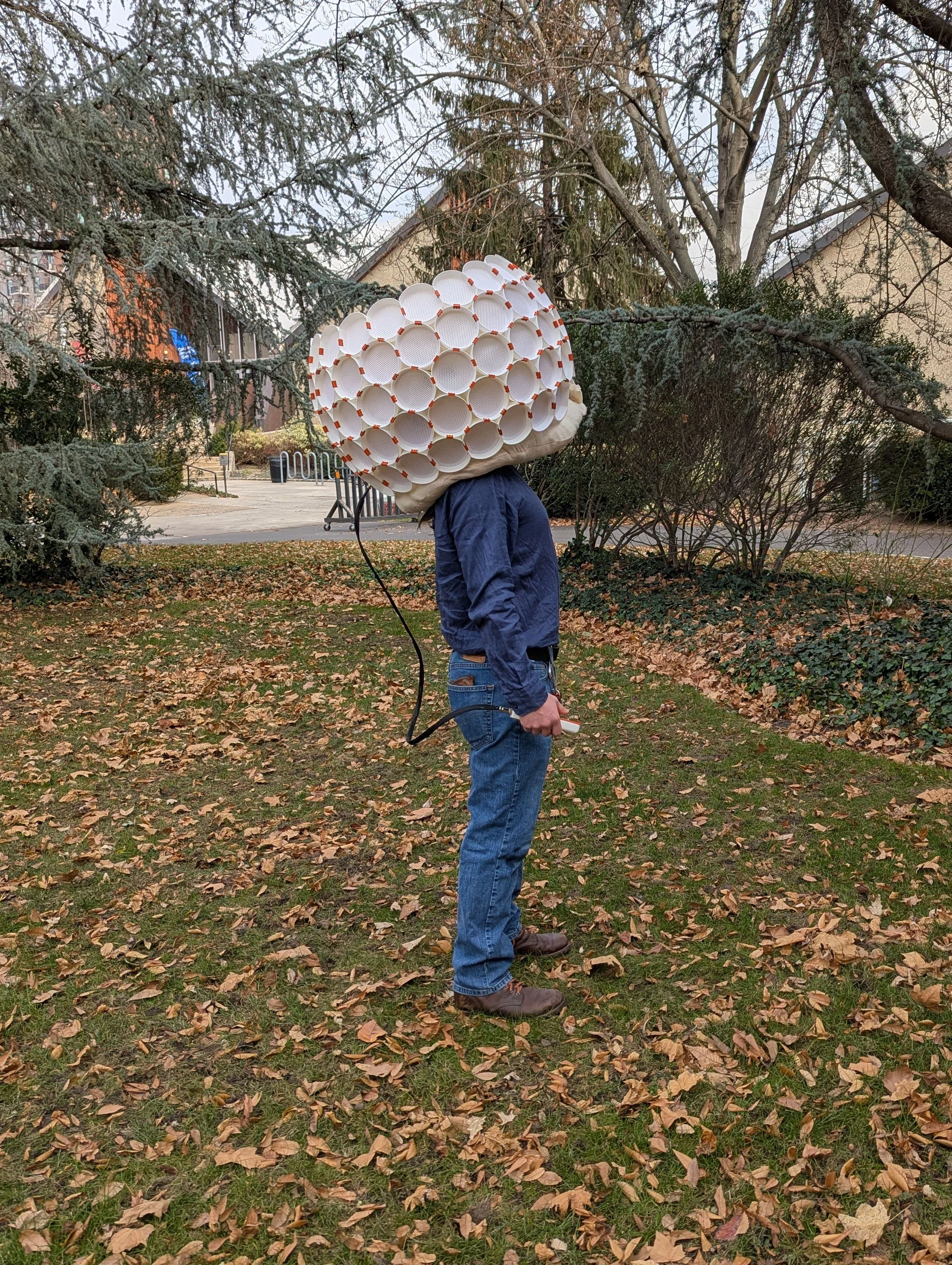
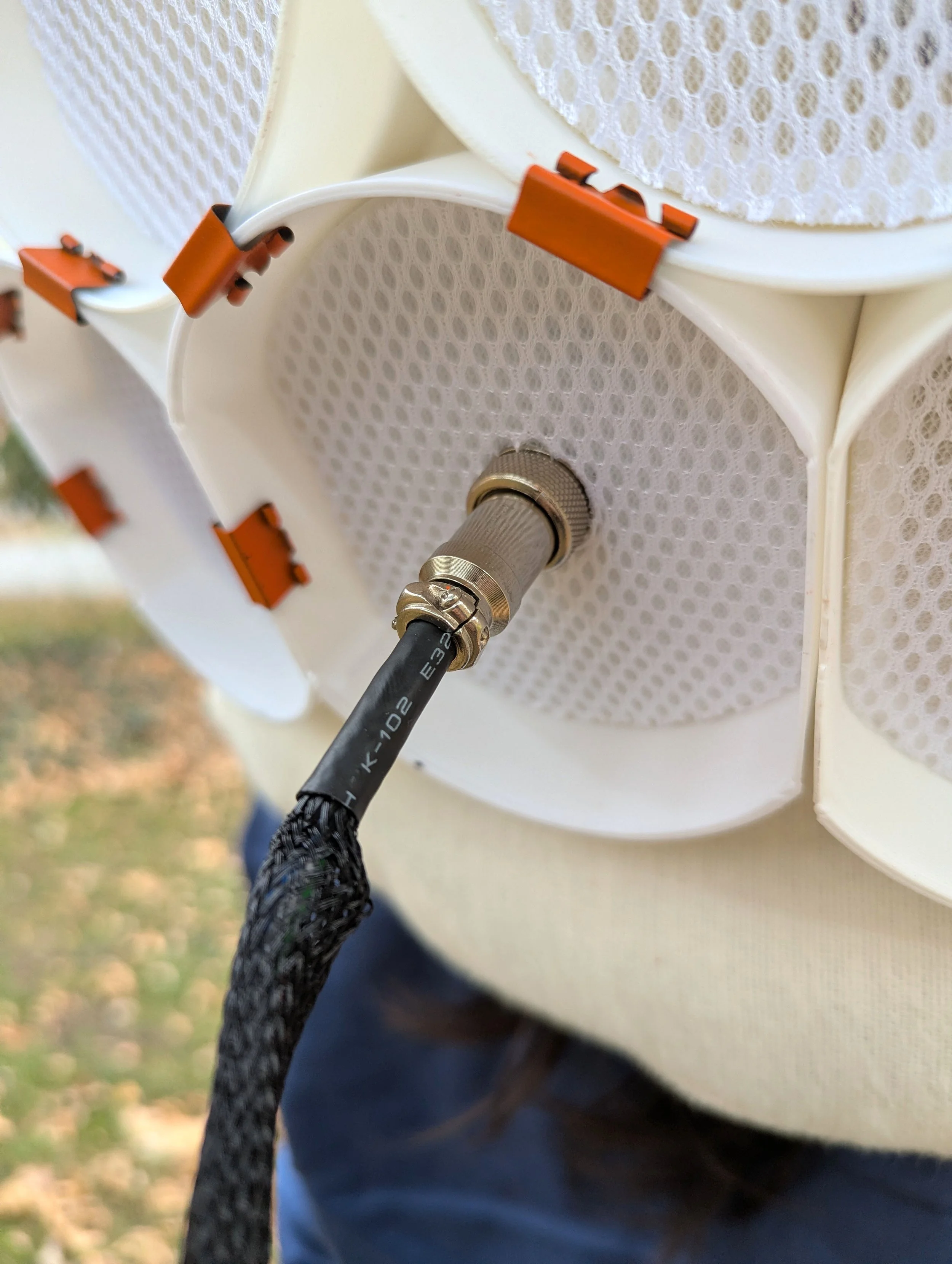
“Embraced” by Justin Urbi
Installed in Commodore Barry Park, Embraced responds to an aging oak tree trapped between two concrete walls. Its weathered trunk and twisted branches bear the marks of time, human intervention, and environmental constraint. Though decaying, the tree endures—its roots pushing against the pavement, quietly resisting erasure.
Urbi’s wearable device transforms the body of the user into a structure of tension and stillness. When worn, the object restricts movement and guides the participant into a kneeling posture, facing the tree. Through a piezoelectric microphone system embedded in the device, users can hear the faint internal sounds of the tree—subtle creaks, shifts, and reverberations that reveal life persisting beneath the surface.
More than a tool, Embraced acts as a gesture of solidarity. By mirroring the tree’s physical strain, the work makes its suffering tangible, asking participants to share in a moment of quiet resistance. In a world where natural systems are increasingly marginalized by urban infrastructure, Urbi’s piece offers a form of listening that is not extractive, but empathetic—a small act of witnessing in the face of slow violence.
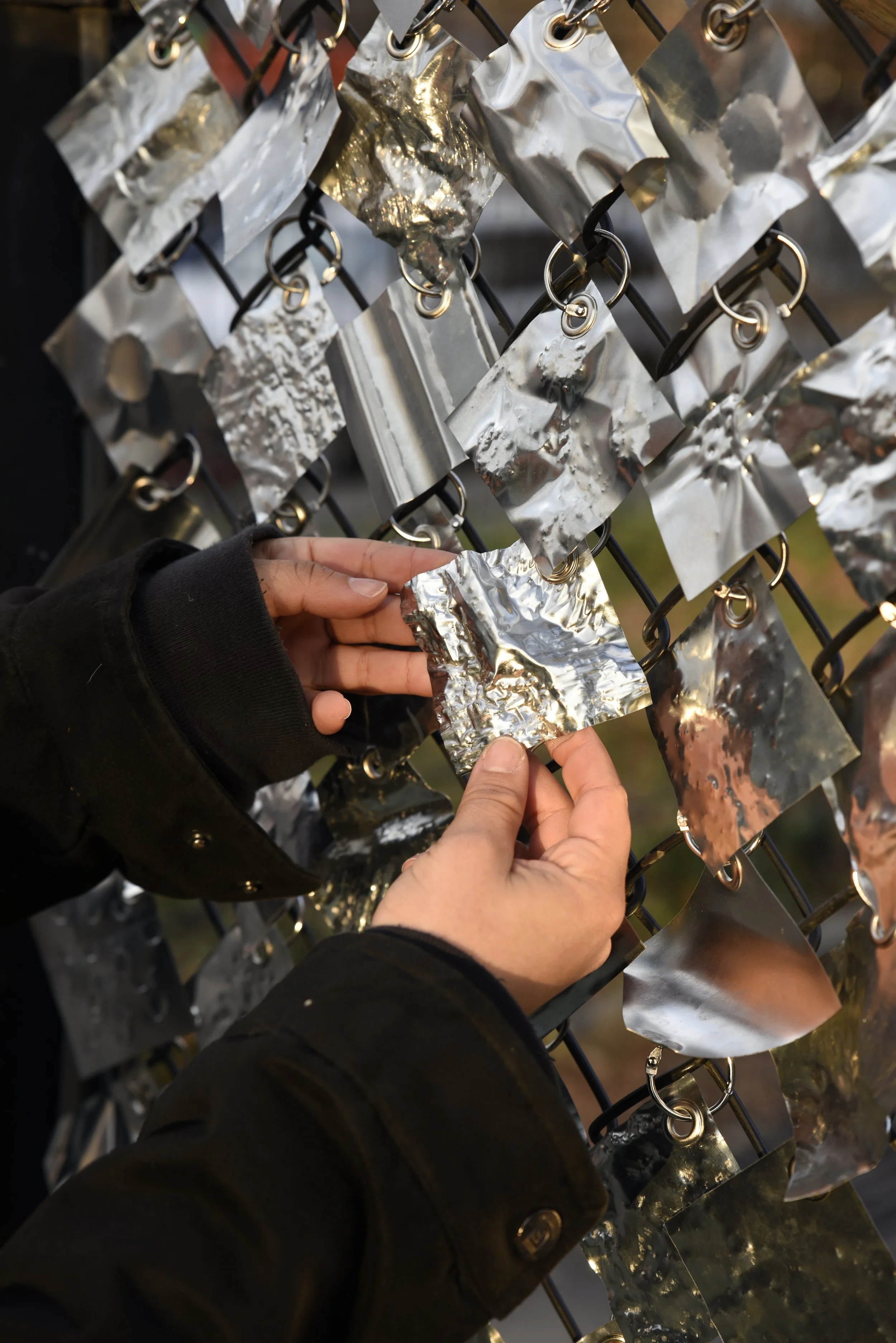
“Mobile Memory” by Fefi Martinez-Aleman
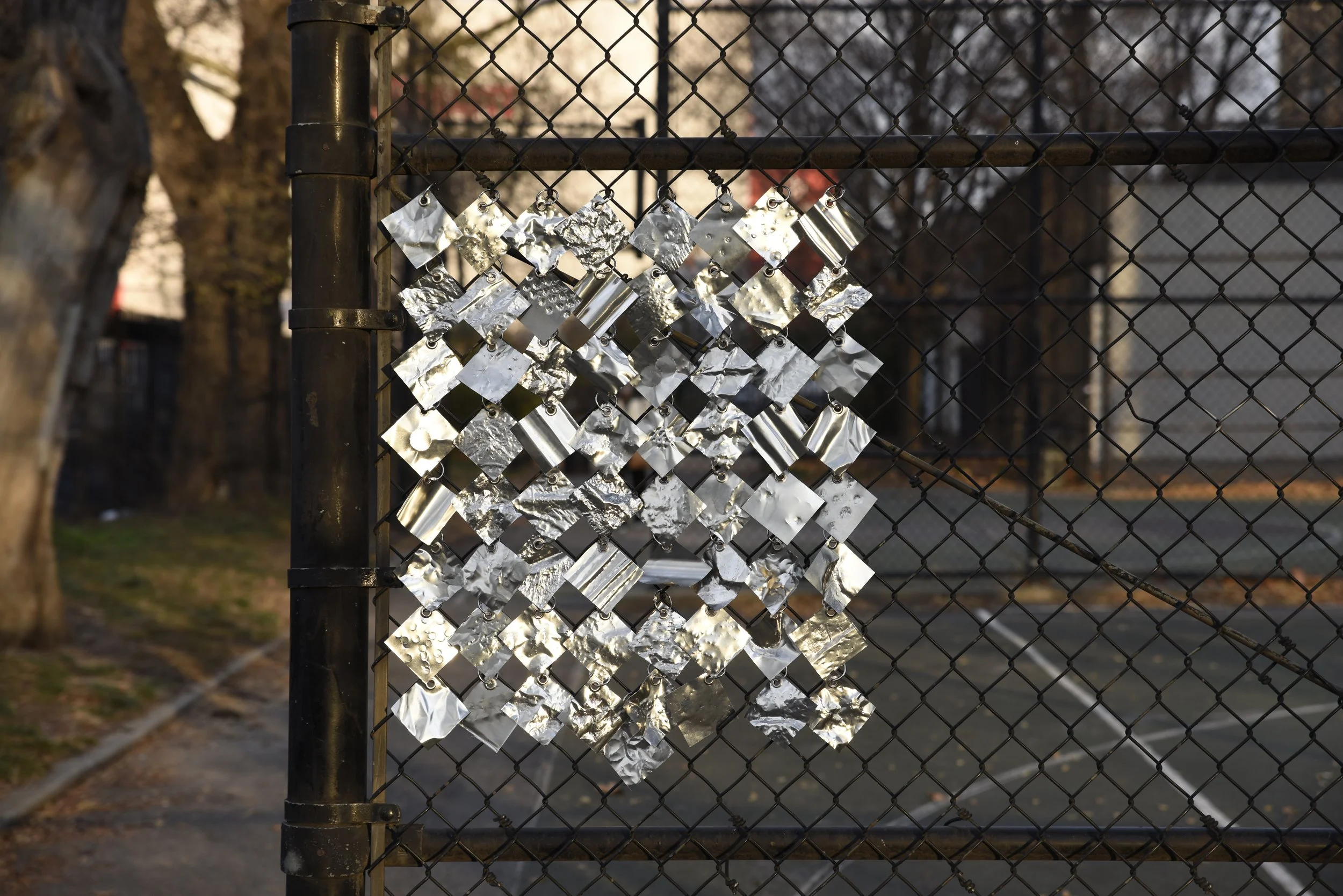
Set within Gilbert Ramirez Park, the project invites neighbors to slow down and engage with the site's often-ignored surfaces—fences, walkways, and architectural remnants—by embossing their textures onto small, reflective metal tiles. These artifacts become fragments of a growing, portable archive, preserving the park’s material identity while reimagining everyday textures as points of connection.
Rather than impose a permanent structure or top-down narrative, Mobile Memory offers a framework for community authorship. The work is designed to be low-cost, replicable, and easily adapted—allowing neighbors to initiate their own texture-collecting events, gradually weaving a shared memory of place over time.
As the collection expands, it transforms how people move through the park, fostering sensory awareness, social connection, and shared stewardship. In its ideal form, Mobile Memory becomes an evolving platform for civic engagement—one that values care, curiosity, and the slow accumulation of attention in the public realm.
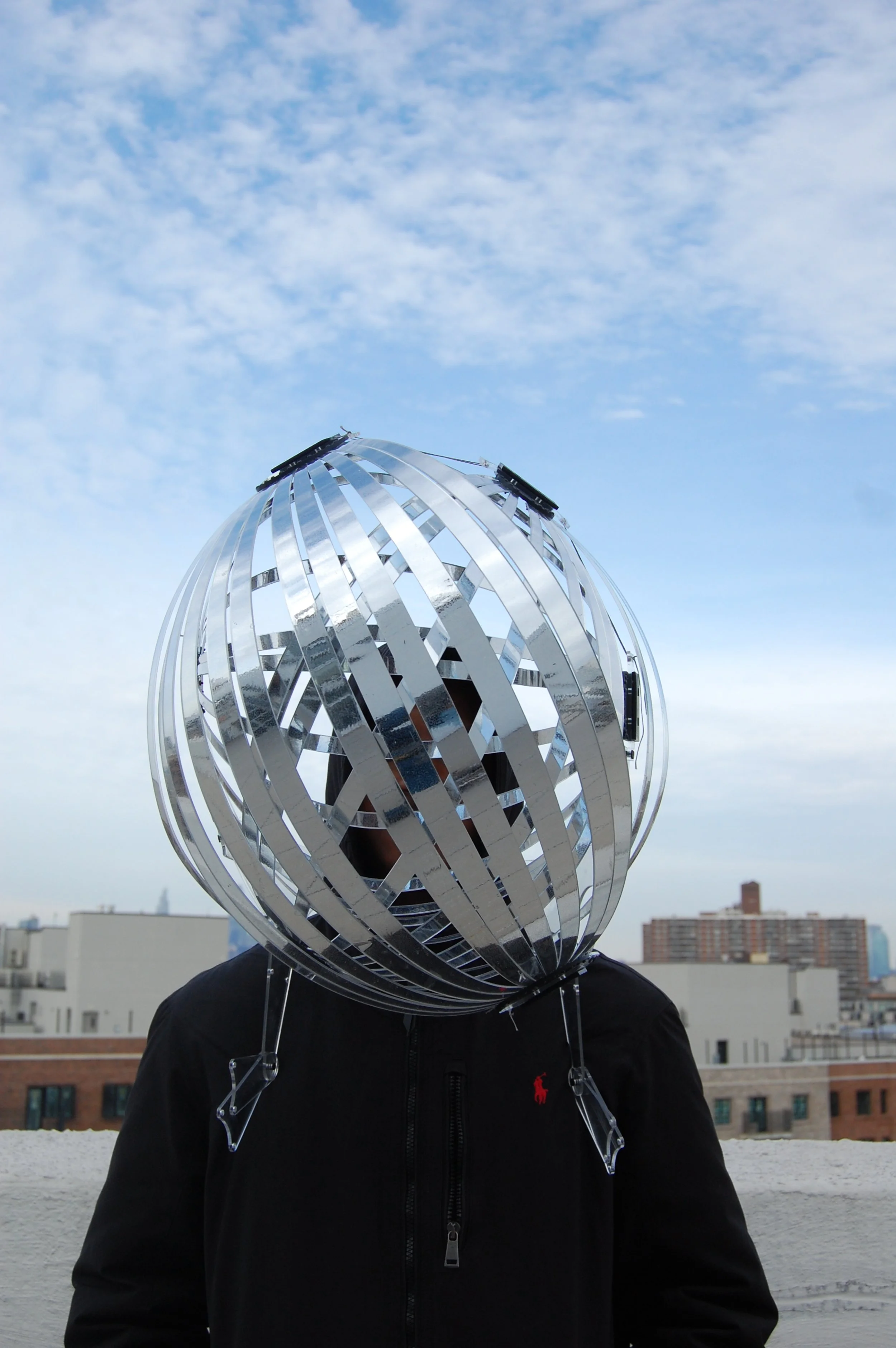
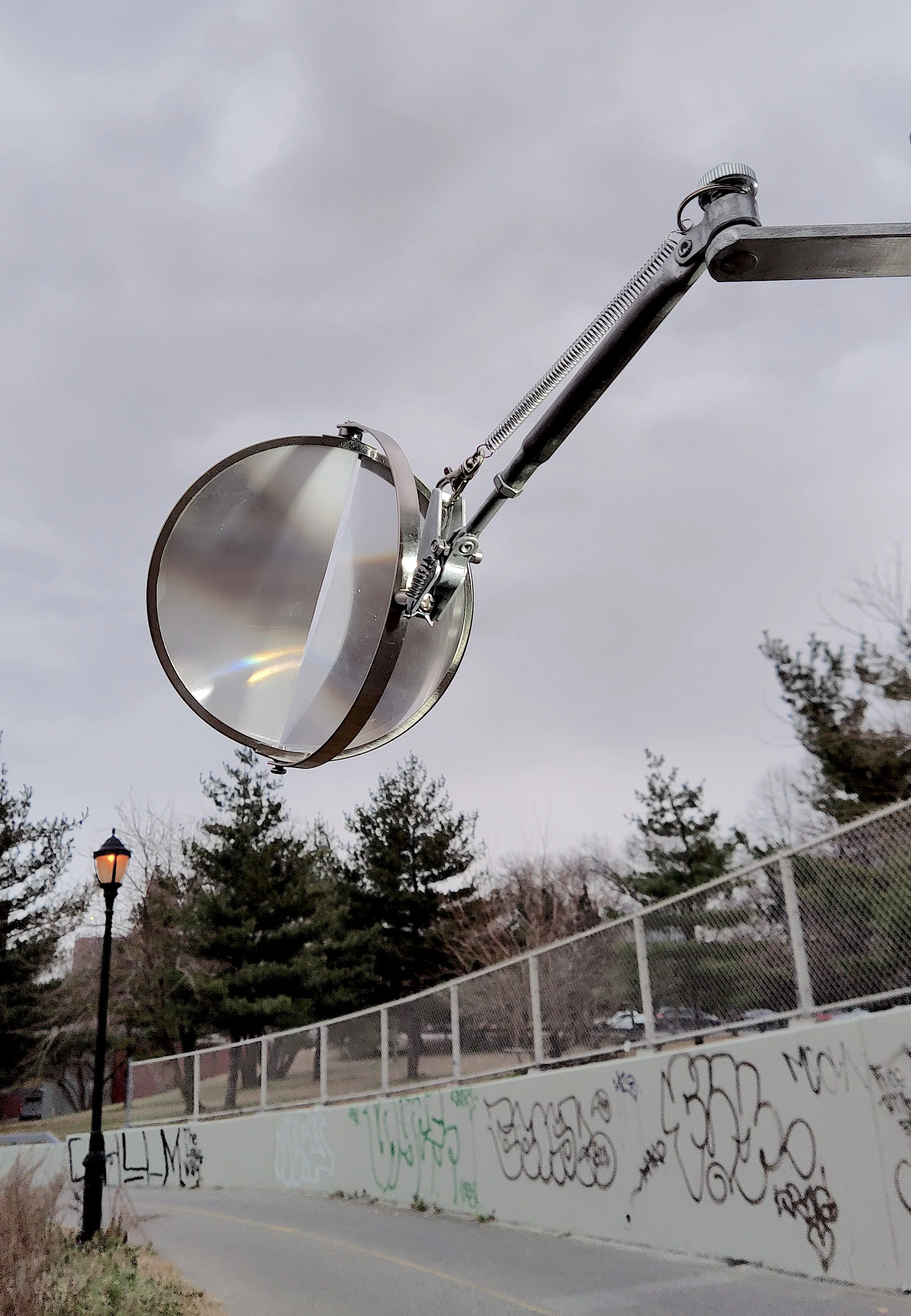
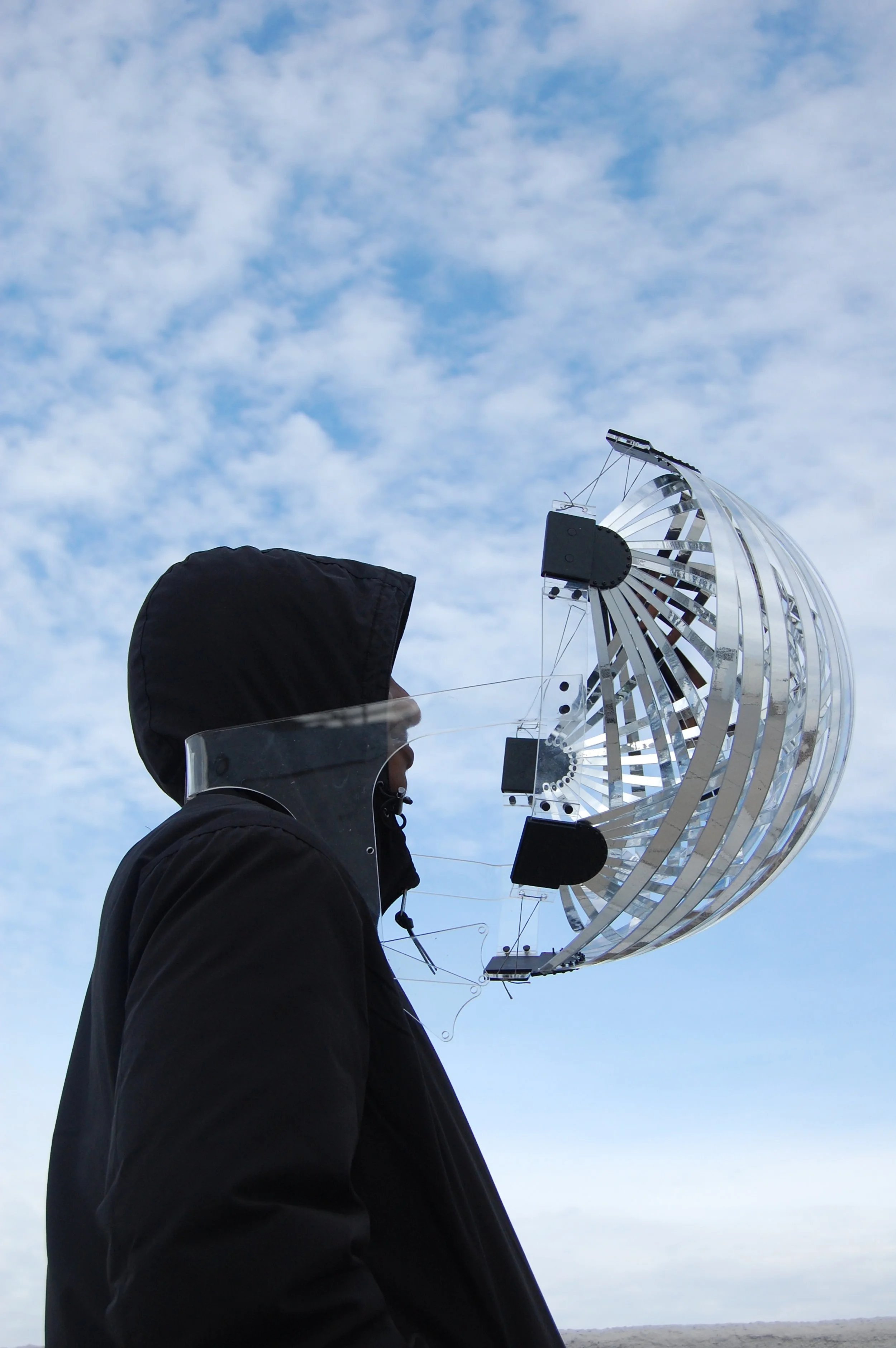
“Pausphere” by Nidhi Radadia
Inspired by the quiet choreography of breeze-blown sidewalk plants, Pausphere invites viewers to pause, notice, and reconnect with the sensory texture of the city. In the midst of fast-paced urban life, the gentle motion of leaves and branches often fades into the background—overlooked and undervalued. This sculptural intervention brings those gestures to the foreground, framing them as invitations to breathe, reflect, and be.
Constructed with lightweight reflective strips, transparent acrylic, and delicate mechanical elements, Pausphere is designed to respond to subtle air movements. The structure shimmers and shifts with a softness that mirrors nature’s own rhythms. It is not static, but alive—moving in dialogue with its environment, blurring the boundary between the organic and the engineered.
By magnifying these fleeting interactions, Radadia proposes a new kind of public engagement—one rooted not in spectacle, but in subtlety. Pausphere encourages viewers to slow down, listen with their eyes, and find presence in the ephemeral. It is both an object and an atmosphere: a gentle illusion that reflects our need for pause in a world of acceleration.
This project was done from August to December 2025 in the Master's Industrial Design Program at Pratt Institute.